
Bucks County City Directory Holdings
The confirmed Bucks County historical-directory trail is a shelf of dated snapshots, not a master database. The earliest corroborated title is the 1871-72 Business Directory and Gazetteer of Bucks County, Pennsylvania. Mercer research also cites Bucks County directories for 1894, 1898, 1902, and 1905. A 1914 farm and business volume adds a rural view. For later address work, the Doylestown Historical Society keeps a street-address collection rather than a printed county directory. Each source needs to be read for the locality and period it actually represents.
| Collection | Years | Where Held | Access |
|---|---|---|---|
| Business Directory and Gazetteer of Bucks County | 1871-72 | Newberry directory collection | Microfiche call 2378; inspect the volume before relying on its fields. |
| Bucks County Directory research leads | 1894, 1898, 1902, 1905 | Mercer historical research | Compare the confirmed dates; complete publisher and holding details were not verified. |
| Farm and Business Directory of Bucks County | 1914 | Northampton Township Archives | Physical item, Box 4, Books BKS-2018-15. |
| Doylestown address-organized real-estate files | c. 1955-2013 | Doylestown Historical Society | Appointment collection; an address research layer, not a countywide directory. |
There is no verified continuous annual Bucks County directory, and no official or local-library source established a countywide historic criss-cross run. Gaps are information too. Compare the next available volume instead of treating an absent year, or an absent name, as proof that a household moved.
Note: A postal place, borough, township, or tax municipality can label the same Bucks County research trail differently.
Bucks County Directories Are Snapshots
Use a Bucks directory as a dated lead. The 1902 example in a Doylestown house-history report identifies Joseph Hart on South Main Street and gives his occupation as clerk. That supports a careful reading of name, street context, and occupation in that example. It does not establish that every Bucks volume supplies a spouse, ownership mark, full household, or identical abbreviations. Those extra columns must be verified on the volume in hand.
Mercer’s work with the 1894 through 1905 directories shows the value of comparing spelling, locality, and occupation across irregular publication years. A person who changes a post-office label may not have crossed a county line. Bucks County has 54 municipalities, and historic tax and resident sources often use the township, borough, or post office that mattered at the time.
| Entry element | How to use it |
|---|---|
| Name | Use the printed spelling as a lead, then try reasonable variants in later records. |
| Street or locality | Record the address or post-office wording exactly; it may not match a modern mailing label. |
| Occupation | The documented 1902 example supplies an occupation, a useful comparison clue rather than identity proof. |
| Volume date | Keep the publication year with every note, because the Bucks directory years are periodic. |
| Unverified columns | Do not assume spouse, owner, renter, or household fields without inspecting that title. |
Mercer’s Bucks County Directory Research
Mercer Museum Research Library at 84 S. Pine Street in Doylestown is the principal deep-research stop for Bucks County. Its stated holdings include more than 20,000 books, periodicals, and pamphlets, 2,500 linear feet of county archives, more than 800 manuscript collections, and more than 12,000 images. Deeds, wills, vital certificates, newspapers, church records, maps, and photographs can help test a directory lead when a period volume is sparse.
The published schedule lists Tuesday and Wednesday from 1 to 5, and Thursday through Saturday from 10 to 5, subject to current admission rules. People unable to travel can request staff research for $75 for the first two hours and $40 for each additional hour. Mercer reports the sources checked and can return up to 15 copies, but expressly does not perform a chain of title by mail.
The Mercer Museum Research Library access page shows the Bucks County directory research setting.
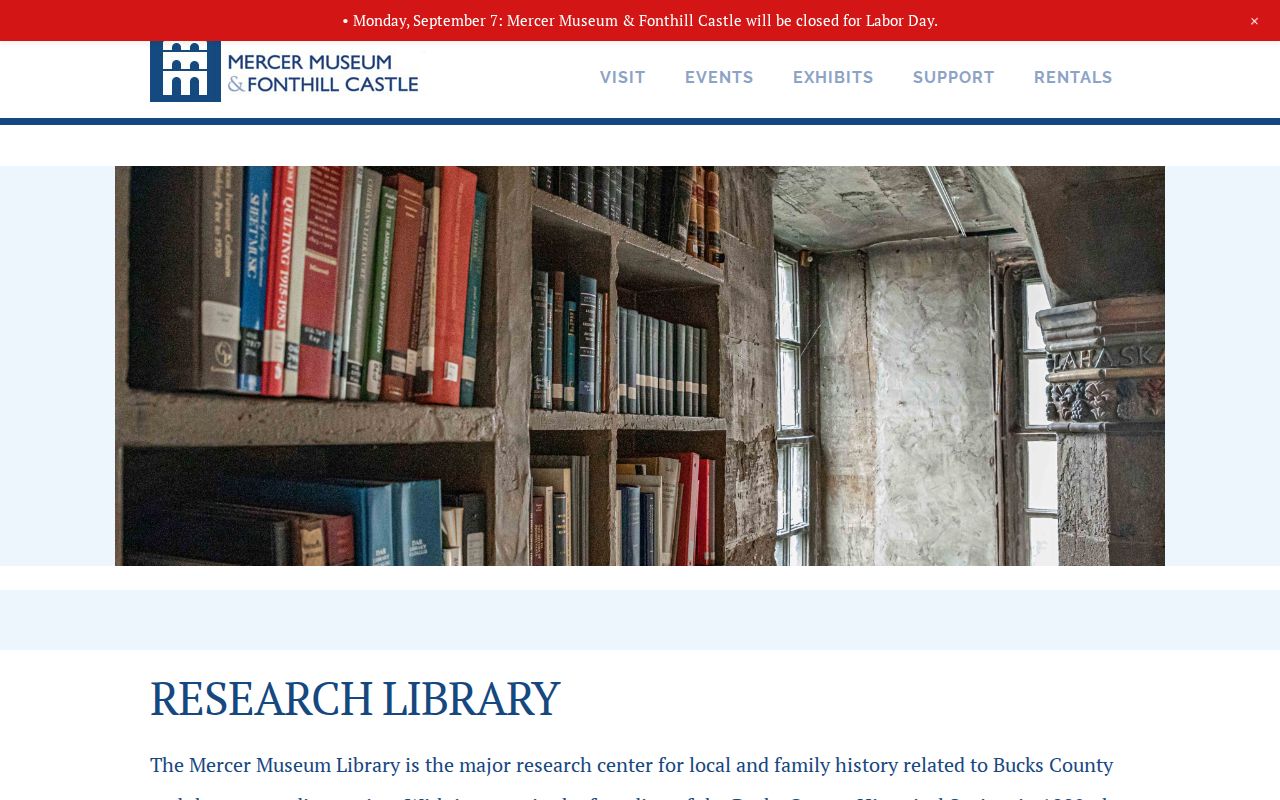
Mercer is most useful after noting the person, locality, and approximate year from a Bucks directory lead.
Reading Bucks County Directory Entries
Read the title page and any front matter before copying an entry. It can identify the publication year, the places included, and the arrangement used in that particular Bucks directory. Save a note or image of the source citation as well as the line that names a person. That prevents a later search from turning a locality clue into a claim that the directory did not make.
- Criss-cross directory
- A directory arranged by address rather than by name. No countywide historic Bucks County criss-cross title or run was verified by the source review.
- Householder index
- An index organized around household heads. Treat it as a format to look for inside a specific volume, not as a confirmed feature of every Bucks directory.
- Abbreviation key
- A glossary printed by some publishers. Photograph or transcribe it only when the volume includes one, because no uniform Bucks abbreviation scheme was verified.
For a modern address-to-owner path, use the county property workflow rather than asking a historical volume to do present-day work. The address-keyed records are handled in the Bucks County street directory material, while the historic volumes remain best for placing a name in a particular period.
Bucks County Directory Companions
A directory line becomes stronger when another local source puts the person in the same place and time. Bucks County Free Library provides local-history material, Ancestry Library Edition on branch Wi-Fi, and HeritageQuest access for sources such as census, wills, directories, immigration, and newspaper obituaries. Fragile or in-library titles can be requested for onsite use. Its local-history collection specifically points researchers toward material about people who formerly lived in a neighborhood.
The Bucks County Free Library local-history collection is a practical starting point for a Bucks County directory lead.
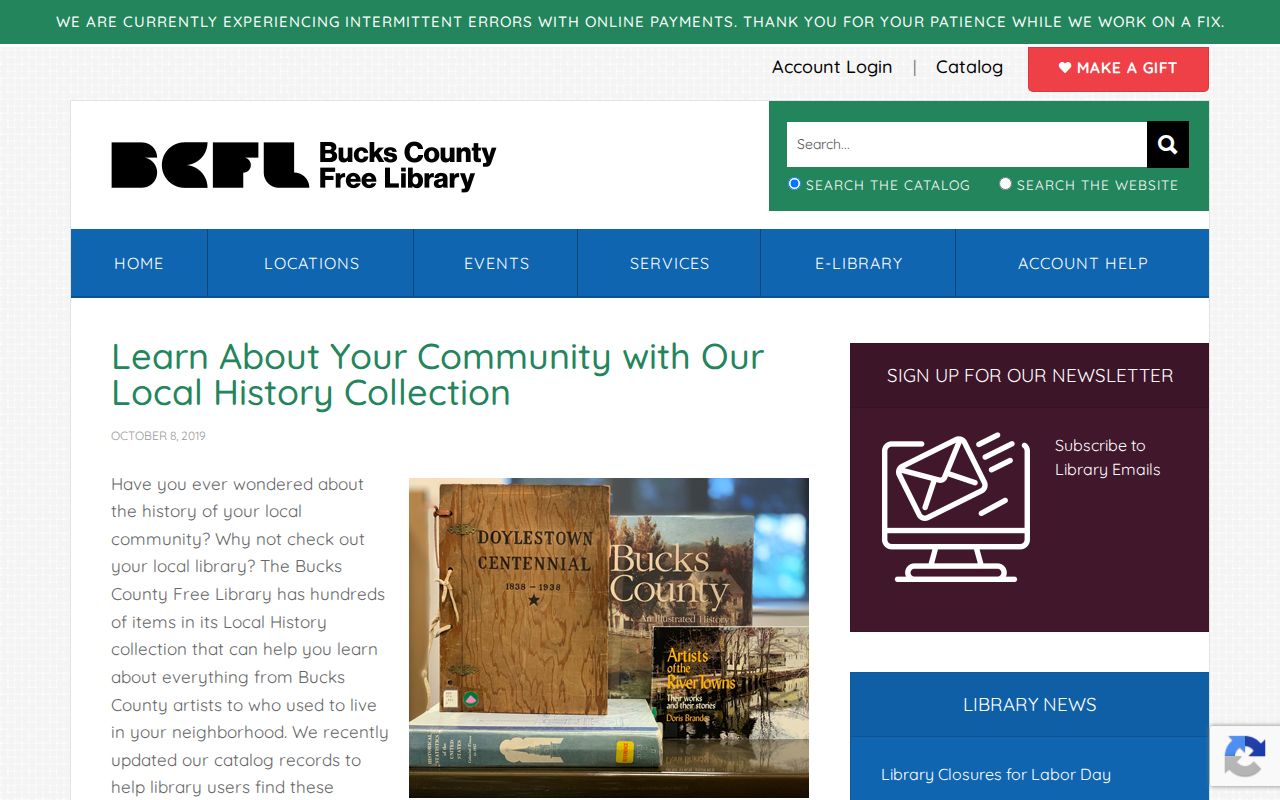
Use the library result to identify the next archival or database channel, not to assume that one collection covers every municipality.
For current database access, the Bucks County Free Library genealogy resource page identifies its available research services and access conditions.
That database layer pairs well with a directory date, a locality name, and a separate primary-record check.
Bucks County Directory Years in Bristol
Lower Bucks has a distinct historical trail at the Grundy Archive. Its Bristol collections include municipal records, selected newspapers, funeral-home books, Quaker material, photographs, school and family resources, and obituaries. The documented newspaper runs include the Bristol Observer from March 26, 1892 through March 31, 1897; the Bucks County Independent from April 29, 1921 through February 5, 1932; and the Bristol Pilot from March 20, 1986 through March 23, 2011.
Grundy also holds Bristol municipal records spanning 1730 to 1998 and John Black Funeral Home books for February 28, 1894 through July 21, 1930. When no selected-years obituary index applies, the archive can search up to two weeks on either side of a known death date. These are Bristol-specific companions, not a countywide online resident directory.
The Grundy Archive Bristol-history collection documents this locality-specific Bucks directory companion.
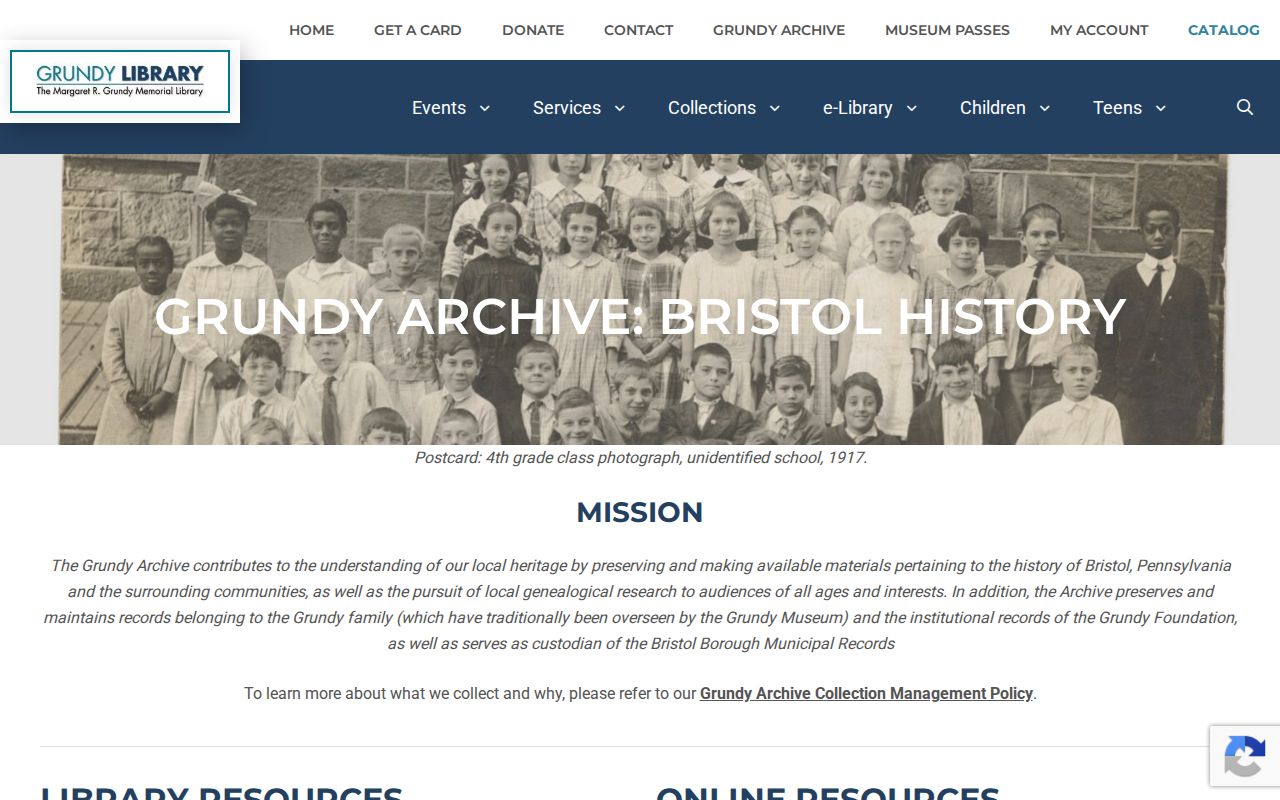
A Bristol name or address lead can move from a directory year to newspapers, municipal material, or obituary evidence held by the archive.
Bucks County Directory Dates
The available Bucks directory dates make a simple timeline, but it is a timeline of surviving confirmed leads rather than a statement that every intervening year was published. Keep that distinction in a research log. It avoids the common mistake of building a false annual chronology from periodic titles.
- 1871-72: The Business Directory and Gazetteer of Bucks County is the first corroborated directory title in the source material.
- 1894, 1898, 1902, 1905: Mercer historical research cites these Bucks County directory years for comparisons.
- 1914: Northampton Township Archives holds the physical Farm and Business Directory of Bucks County.
- c. 1955-2013: Doylestown Historical Society’s address-organized real-estate collection provides a later locality-specific route.
Before a visit, consult the PHMC Bucks County digitized-record and microfilm guide. It gives exact state-archive runs and helps separate county archive material from a city-directory lead.
Trace Bucks County Directory Households
Tracing a household through Bucks directories means following the available years, not filling every year with a guess. Begin with the name, locality, and date closest to the known event. Write down each spelling, street or post-office label, occupation, and citation. Then use a census, deed party index, newspaper, church register, or probate file for the interval between the periodic volumes.
- Find the person in the closest confirmed Bucks directory year and capture the locality wording exactly.
- Compare the next available 1894, 1898, 1902, 1905, or 1914 lead when the time period fits.
- Check the relevant federal census schedule, released through 1950, for household composition at its census date.
- Use Recorder Direct and Indirect Party indexes or a probate file only for the different question each record can answer.
- Close a death-period lead with a newspaper or obituary source, then verify the original record where possible.
The Bucks County Genealogical Society has a free transcription index and church-record leads, but it asks researchers to verify against original sources. Its online material is useful for deciding which custodian or volume to consult next.
Early Bucks County Records
Bucks County was created in 1682, and its early record landscape extends beyond printed directories. The Pennsylvania State Archives identifies a Register of Inhabitants for 1682-1689, inventories for 1684-1688, tax books and lists, apprenticeship material, and commissioner minutes. Deed Book I-1 begins in 1684 and covers 1684-1692. These are valuable early resident clues, but they are not modern profiles and must be read in their original context.
The State Archives Bucks County series list notes grantor/grantee deed-index coverage from 1684 through 1919. It also confirms why an early directory trail may end at microfilm, an archive desk, or a record series rather than a searchable online list. A current county property search cannot translate those records without the parcel, legal-description, and party references that connect the eras.
Note: Verify any transcription or directory clue against the holding institution’s original record before relying on it for family history.