
Bucks County Past Residents by Era
A Bucks County address history needs sources from more than one era because the records answer different questions. The Assessment record gives a current parcel start. Recorder records establish recorded transfers. Directories and census schedules help with households. Probate, newspapers, and municipal files can add dates and local context. Start with the row that fits the period, then move outward only when its result gives the next usable name, parcel, or reference.
| Source | Years It Covers | Where Held | What It Shows |
|---|---|---|---|
| Recorder deeds, mortgages, and plans | 1684-present | Recorder, LANDEX, and public research area | Recorded parties, legal description, and earlier-reference clues. |
| Instrument-number placement | July 1, 2012-present | Recorder and LANDEX WebStore | Modern instrument number, while older book/page references remain important. |
| Assessment parcel record | Current system, weekly updates stated | Board of Assessment iCare and counter | Assessed owner, parcel or map number, situs address, and property categories. |
| Periodic directories and historic maps | Confirmed leads: 1871-72, 1894, 1898, 1902, 1905, 1914 | Library, archive, and historical-society collections | Locality, name, occupation, address context, and address terminology where present. |
| Federal population census | Released schedules through 1950 | National Archives, genealogy repositories, and local-history sources | Household composition and location at a census date, not a deed match. |
| Probate and Orphans’ archival records | Records from 1684; genealogical name route 1684-1950 | Register of Wills Archive Research Center | Estate, death, heir, and marriage-application leads. |
The Recorder’s holdings are party and year indexed, not an address-first resident list. A recorded owner is also not automatically an occupant. The careful route is parcel to owner, owner to deed, deed to predecessor, and then separate household evidence for the date in question.
Start Bucks County Address History
Begin with the Bucks County Board of Assessment iCare search, using the address mode to find the current property. Copy the map or parcel number, situs address, municipality, assessed owner, and any visible sales clue. The parcel number is the durable cross-office key. Recorder requirements say a real-estate document must show the County Tax Parcel Number and pass through the Board of Assessment before recording.
Next, use the county Parcel and Floodplain Viewer to check the parcel’s map and municipal context. The map supports context, not a title decision or a survey. A mailing address can differ from a physical situs address, so neither one alone establishes who lived there. When an old deed uses a tract, lot, subdivision, former road name, or adjoining owner, keep the parcel number and legal description in the research notes.
Note: Bucks County has 54 municipalities, so route a permit or code request to the municipality identified through the parcel record.
Trace Bucks County Past Residents
After the parcel produces an assessed owner and a likely purchase period, search that person in LANDEX. Bucks calls a seller or borrower a Direct Party and a buyer or lender an Indirect Party. Use the full party name, an approximate year, a document type, and a date range. The general name search caps matches at 250, so narrow a common surname with a first-name fragment or date. A purchased document can then lead to the transfer that came before it.
- Locate the current parcel in assessment and preserve its map number, municipality, situs address, and assessed owner.
- Search the owner as an Indirect Party around the likely acquisition period in LANDEX, using the deed category and a focused date range.
- Read the acquisition deed’s legal description and recital, also called the being clause, after the legal description.
- Use the cited prior book/page or instrument reference, or search the named former party in the direction the transaction requires.
- Repeat backward, noting every deed reference, parcel description, and period-specific index group.
- Direct Party
- Bucks County’s label for a seller or borrower, formerly called a grantor or mortgagor.
- Indirect Party
- Bucks County’s label for a buyer or lender, formerly called a grantee or mortgagee.
- Chain of title
- The sequence of recorded transfers for a property. It can identify owners but does not prove every past household.
- Legal description
- The lot, tract, plan, or boundary language in a deed. It can bridge old and current address terms more reliably than a street string.
Bucks County Deed Numbers Since 2012
July 1, 2012 is a key placement divide for Bucks County address-history research. New documents receive an instrument number instead of a new book/page reference. Older chains may still use book/page, and the deed recital can connect the two systems. Searchers who insist on one placement type can miss the next document in the chain.
The other break is the historic index structure. The Recorder groups its index books into 1684-1919, 1920-1941, 1942-1951, 1952-1963, 1964-1971, 1972-1979, 1980-1988, 1989-1993, 1994-1998, and 1999-present. Before the newest computerized index, names are not simple phone-book alphabetical lists. The public research area offers historical index instruction, and staff can provide a short LANDEX tutorial or arrange specialized assistance.
Remote access has limits. WebStore documents are paid and include a $5 order-processing charge. Certified copies come from the courthouse. The Recorder also provides copy routes by phone or mail, and a property owner may request a complimentary copy of that owner’s deed by email. The public counter remains the fallback when a historic index group or certified copy is needed.
A Recorder update dated April 15, 2025 reported $944,775 distributed to Record Improvement from January 2022 through March 31, 2025 for preserving historic deed books and improving public access. That work supports access, but it does not turn the older party indexes into a complete address search.
Pair Bucks County Past Households
Ownership is only one layer of a prior-address search. The confirmed Bucks directory years are periodic, and no countywide historic criss-cross directory run was verified. Use a name and locality in the nearest available 1871-72, 1894, 1898, 1902, 1905, or 1914 source. Then pair that dated lead with a released census schedule, newspaper notice, church record, or probate file. The historical collections themselves are described on the Bucks County city directory page.
The flow is simple: address and parcel number to recorded owner, owner to deed and its earlier reference, then directory or census evidence for a household at the relevant time. A directory confirmation is not title proof. A deed is not a household enumeration. When those records agree on a name, locality, and period, note the agreement without converting it into a claim that every resident has been identified.
The Northampton Township Archives record for the 1914 Farm and Business Directory shows one rural-era Bucks County source.
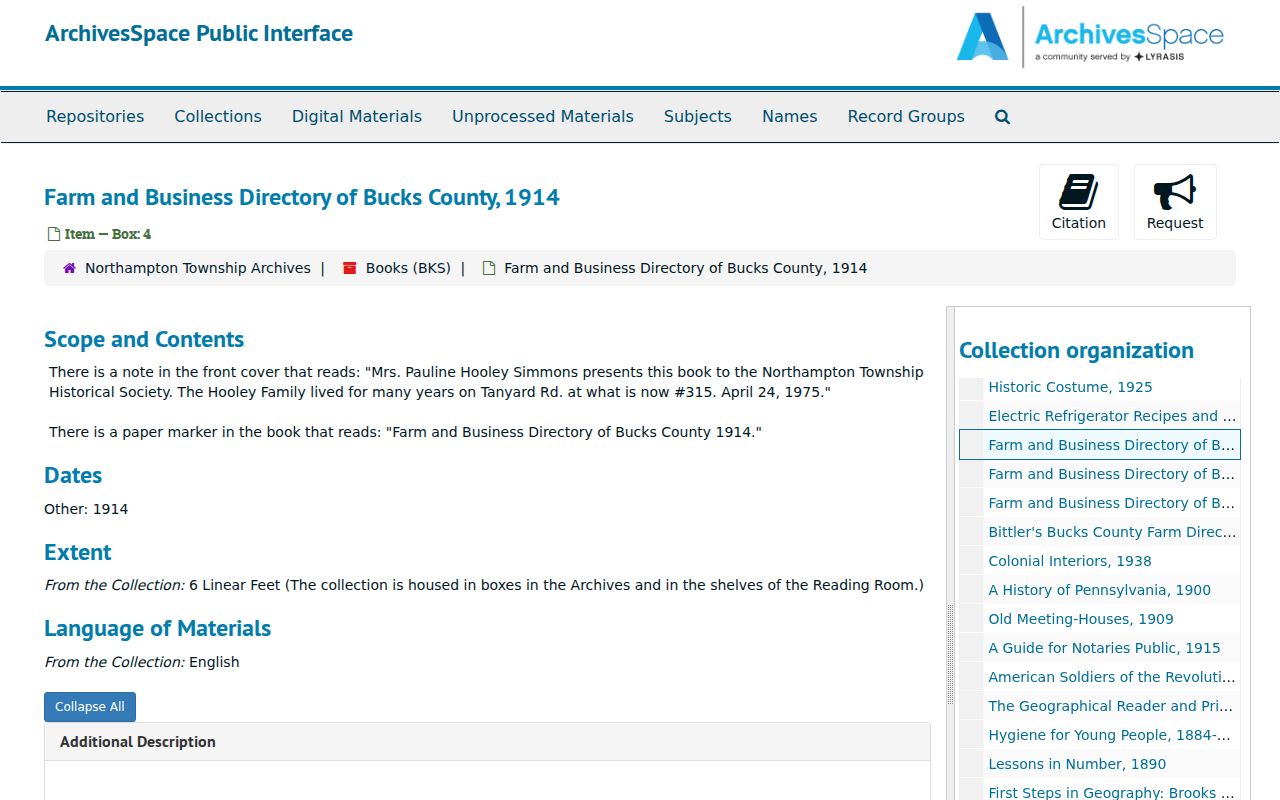
That physical item can provide a dated locality lead, but it should not be presented as a full household roster.
Lawful use. Use Bucks County previous-resident material for family history, estate matters, property history, civic research, or personal safety. Do not use it to stalk, harass, or harm a living person.
Doylestown Bucks County Address History
Doylestown has a separate, local address-history option. The Doylestown Historical Society keeps an appointment collection of real-estate material arranged alphabetically by street address from about 1955 to 2013. Its Wilma B. Rezer research files cover 1865 to 2010, with bulk material from 1970 to 1990. These are Doylestown resources, not a free countywide previous-resident search.
The Society’s paid historic-house program began in 1980 and reports an approximate construction date, previous resident names, and property history. Its form requires the subject address and tax parcel number, among other facts. The listed cost is $575 for a report or $700 for a report plus plaque. That service is useful when the property is in Doylestown, but it does not replace the Recorder’s deed chain or extend across Bucks County.
Bucks County Probate and Obituary Trails
When an owner disappears from the recorded chain, the Register of Wills and Clerk of Orphans’ Court can provide an estate or death-period lead. The Archive Research Center has complete microfilm files. Original files from 1684 through 1936 and originals for the most recent five years are onsite; intermediate originals are offsite and require an advance request. The office accepts in-person and mail requests with a self-addressed envelope.
The Register’s genealogical and archival request page explains the Bucks County archival route for an address-history trail.
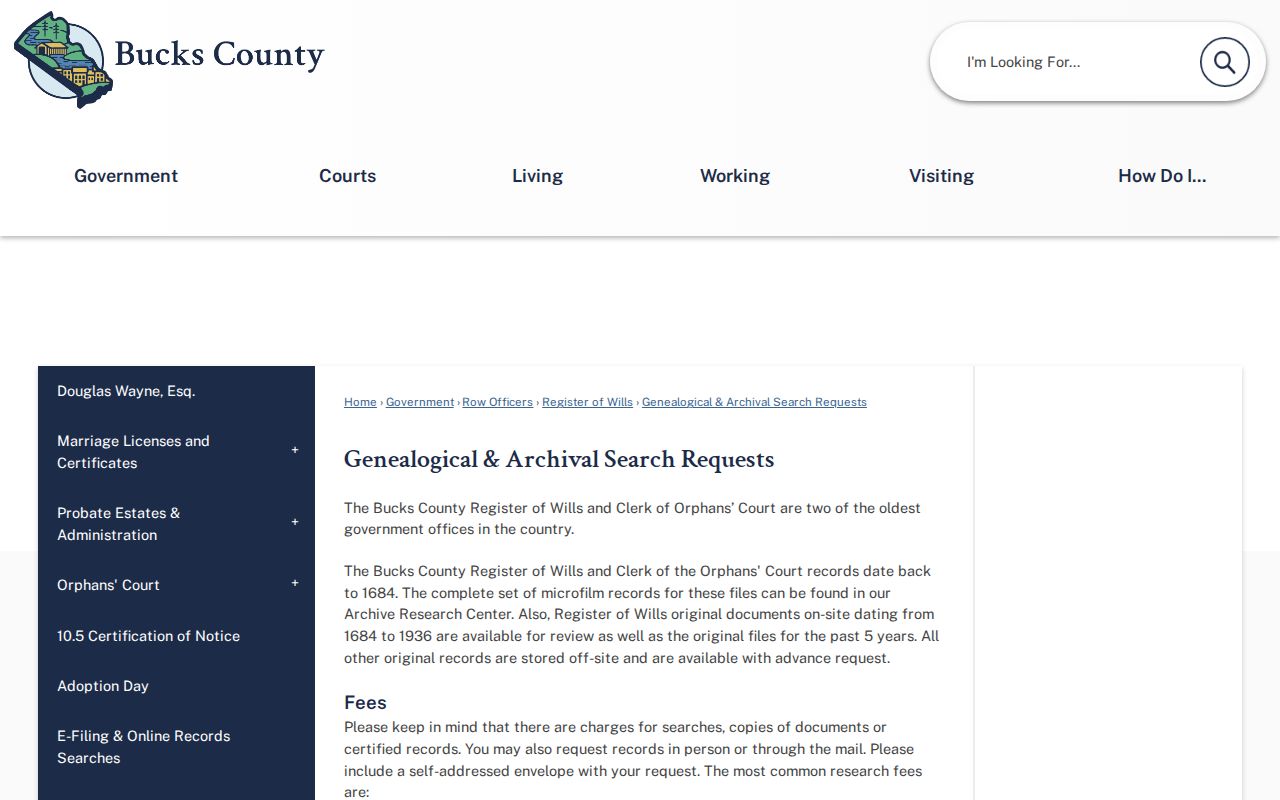
A Register index result can point to an estate or death record, but it must be read as a probate clue rather than a complete address history.
The Register lists a $25 nonrefundable genealogical name search for 1684-1950. Its published details also include an index printout route, public-made copies at $0.25 per page, and staff copies at $1 per page. For historic naturalization papers and term papers, the Prothonotary genealogical and historical archive offers appointment and onsite-microfilm access.
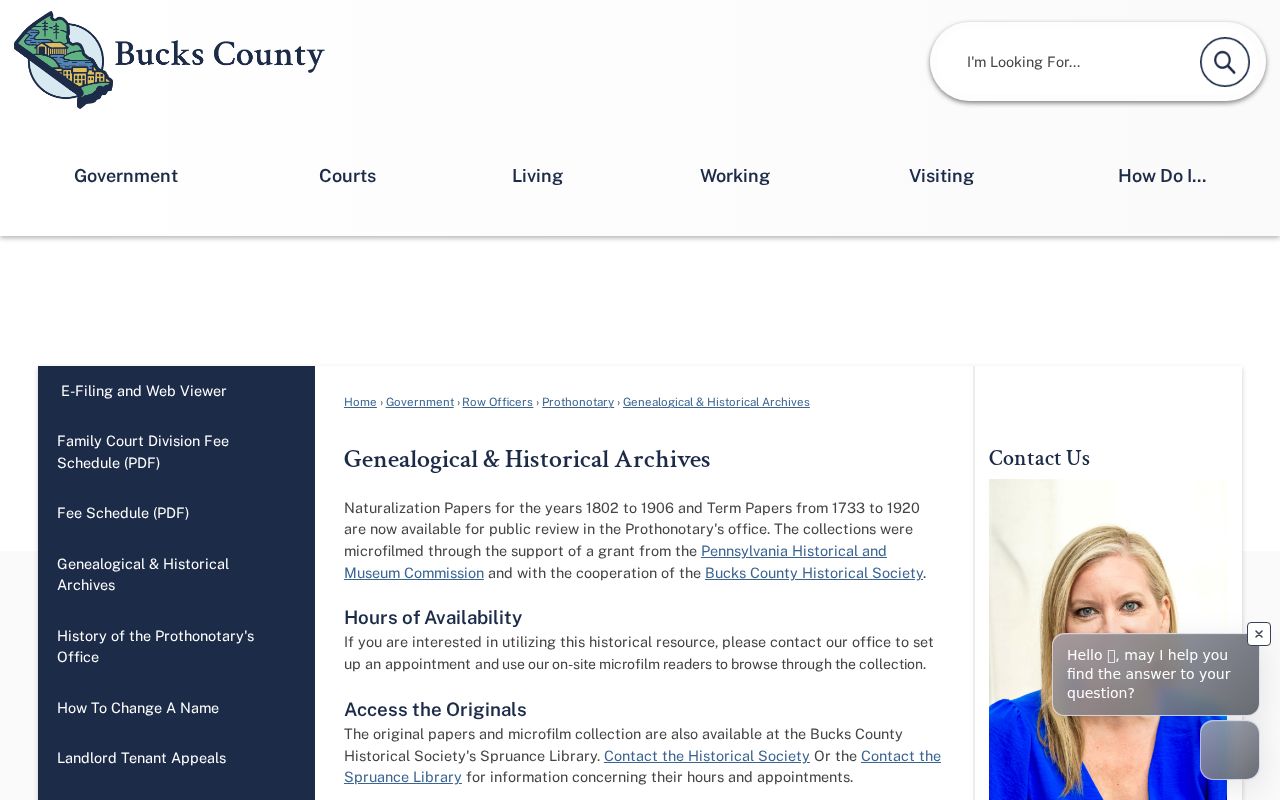
Those archives can close a time gap around a named person, while the deed chain continues to track the property itself.
Bucks County Deeds Since 1684
Bucks deed books begin in 1684. The Pennsylvania State Archives identifies Deed Book I-1 for 1684-1692, 2B-1 for 1692-1700, and 3C-1 for 1699-1723, with grantor/grantee index coverage from 1684 through 1919. The Recorder describes its own holdings as 1684 to present. This long span is a remarkable property-history resource, but an early address trail must be translated through party names, the legal description, parcel information, and earlier deed references.
The Pennsylvania State Archives Bucks County series list gives the historical record-series context before a visit or request.
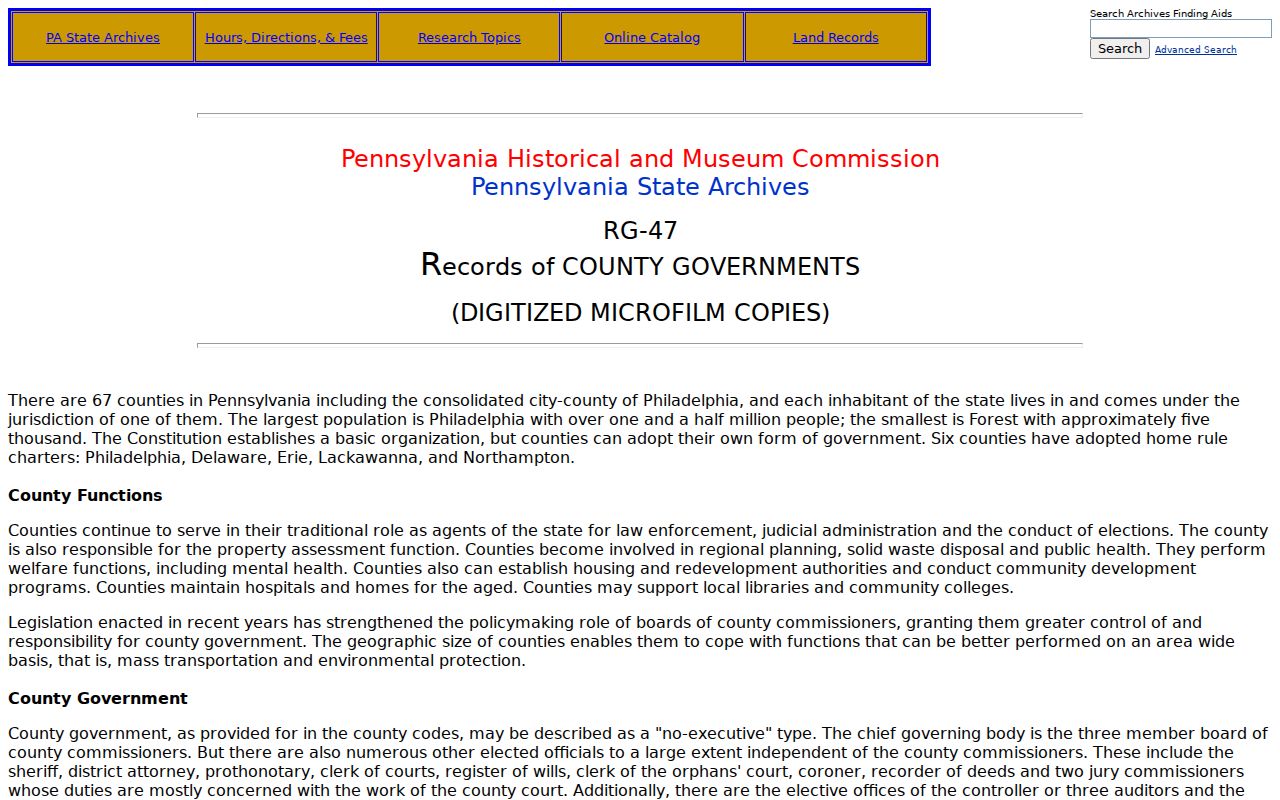
The series list helps identify the relevant deed, tax, inventory, or court material without treating any one index as an uninterrupted resident record.
Early Bucks deeds carry documented cautions. Some were not promptly recorded, and a matching cut edge could serve as transfer evidence. Misspellings, descriptions, signatures, and other errors can break a title trail. Corroborate each link with the actual deed and an independent source before relying on it.
Note: The Recorder’s free Fraud Alert System sends notice of a recorded document, but it is an alert and not a title determination.