
Build a Bucks County Resident Lookup Matrix
A careful Bucks County resident lookup separates the question from the record. The Board of Assessment can supply an assessed owner, parcel number, physical address, and mailing-address distinction. The Recorder ties named parties to recorded land instruments. Court systems document a case role and filing history. The Register of Wills keeps marriage and estate material, while state vital services control many birth and death records. Each source supplies a dated, limited fact rather than a full household list.
| Record | What It Can Confirm | Custodian | Access Route |
|---|---|---|---|
| Assessment property record | Assessed owner, parcel, situs and mailing context | Board of Assessment Appeals | Free iCare search and public counter |
| Recorded document | Named deed or mortgage party, date and legal-description trail | Recorder of Deeds | LANDEX remote access or research counter |
| Court docket | Caption, role, filing date, status and docket number | Court record custodian | UJS, Web Viewer, counter, or copy route |
| Voter record | Individual registration status | Board of Elections | Individual service or Board assistance |
| Vital, marriage, or probate record | A family event or estate fact at the record date | Register of Wills or state custodian | Eligibility rules, archive service, or custodian copy |
Start with the fact already in hand. A property question begins with the parcel and assessed owner. A court reference begins with a docket number, office, caption, and filing date. An estate question belongs with the Register index and estate number. For election status, use Pennsylvania’s individual service or the Bucks County Board of Elections, not an assumed street roster.
Note: A property owner, tax mailing address, and court party can identify different relationships, so each needs a date and a second record before it is used.
Search Bucks County Court Records by Party
Bucks County court records are split by custodian. The Prothonotary handles civil and family filings, the Clerk of Courts handles criminal case information, and the Register of Wills handles Orphans’ Court material. The county docket-routing page directs civil searches to the Prothonotary Web Viewer, criminal and Magisterial matters to the statewide Pennsylvania UJS Case Search, and Orphans’ matters to the county online-records route. A general county request does not replace the custodian’s portal, counter, or copy procedure.
In UJS, the participant route uses last and first name, then can be narrowed by Bucks County, filing-date range, docket type, case status, court office, or participant role. Results provide a docket sheet and court summary. An observed result can include a docket number, court type, caption, status, filing date, participant, county, court office, and event details. Use several of those fields together. The research warns that a name match is not an identity determination, and recent, juvenile, sealed, expunged, or limited-access matters may be absent.
The Bucks Prothonotary page describes public Web Viewer and E-Filing access. Its civil viewer supports case, party, parcel, date, filing, court, matter-code, judge, and attorney controls. The result grid can show case number, matter code, commenced date, case type, caption, lis pendens, parcel number, and consolidation status. Family Court documents are not online, and some documents require office inspection.
See the Prothonotary’s public access information before using this image.
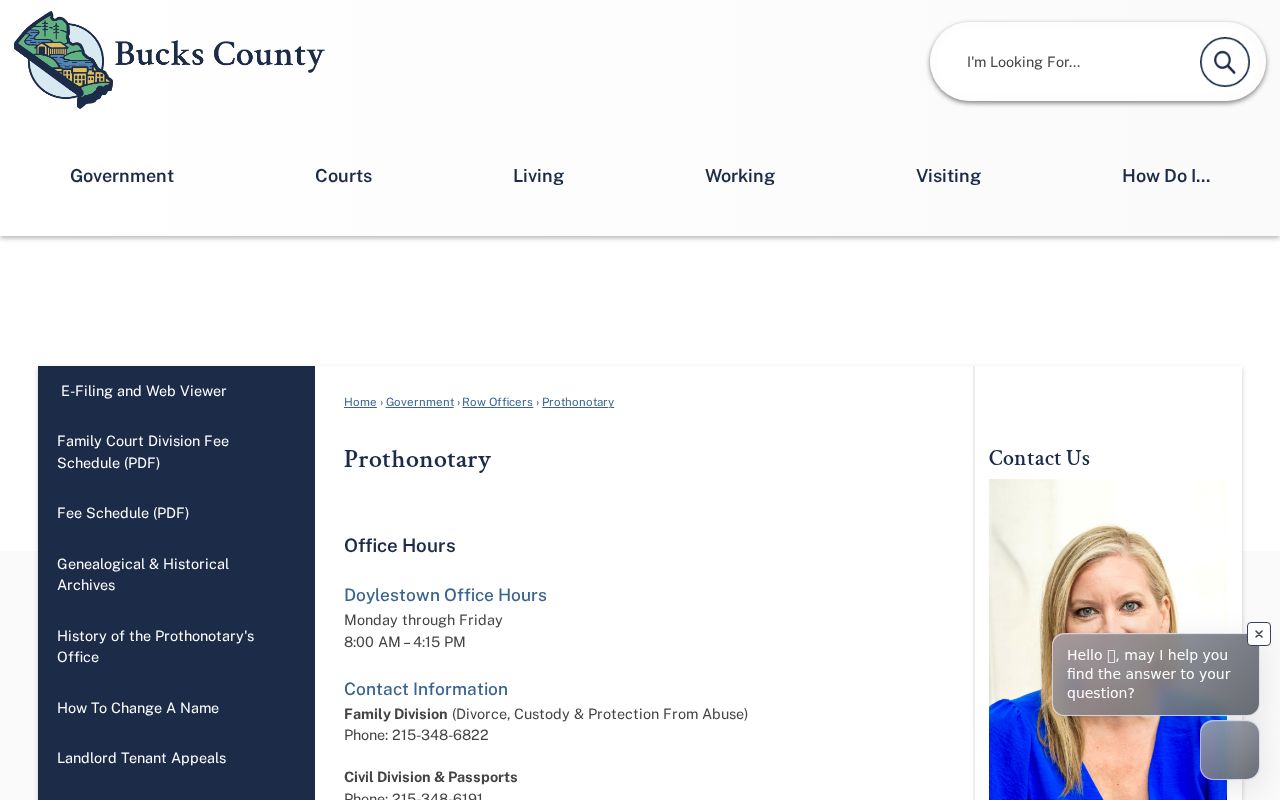
The Web Viewer screen is a useful reminder to record the case number and filing details, rather than relying on a caption alone.
Confirm a Bucks County Resident Lookup
To look up a resident without confusing a same-name record, anchor the search in at least two stable identifiers. A full legal name may vary by middle initial, spelling, married name, or party role. Municipality, date range, parcel number, docket number, court office, and recorded role are stronger checks than a surname alone. The verification sequence uses the county’s documented channels and keeps each record in its proper context.
- Use the assessment search for a known property. Capture the parcel or map number, municipality, assessed owner, and whether the result is a situs or mailing field.
- For a recorded transfer, search the party and likely period through LANDEX WebStore or ask the Recorder research area for historical-index help.
- Run the appropriate court party search. Keep the caption, docket number, court office, filing date, and role together before comparing it to another source.
- For a documented family event, use the Register, State Archives, or Department of Health route that controls that event. Request a certified copy only from the custodian when eligibility permits it.
- Docket
- A court’s numbered case record, used with its court office and filing date to identify the proceeding.
- Index and image
- An index points to a record or lists basic fields. An image is the underlying document, which may have a fee or an office-access limit.
- Certified copy
- A copy issued and authenticated by the office that keeps the original record. An online image is not automatically certified.
For an old family trail, the Register’s genealogical and archival service reaches county material beginning in 1684. It offers archive and index routes when an online search ends. Estate records can identify legally relevant parties, but the event date and case type still matter before drawing a current relationship conclusion.
Use Bucks County Vital and Probate Records
Vital-record rules are narrower than ordinary public-record rules. Pennsylvania Vital Statistics Law §801 makes birth records public 105 years after birth and death records public 50 years after death. The State Archives holds the original records once they pass those thresholds. For post-1906 records, the Department of Health birth service and death service set eligibility and order channels. A public-era index or a historic noncertified copy does not establish eligibility for a newer certified record.
Marriage applications belong with the county where the couple applied, not necessarily where the ceremony occurred. Bucks County’s Register of Wills and Clerk of Orphans’ Court issues marriage licenses and maintains probate and Orphans’ records. Its Archive Research Center has complete microfilm files. Original files from 1684 through 1936 and the most recent five years are available on site, while intermediate originals require advance request. In-person and mail requests remain useful when the online path does not reach the needed record.
Open the Register of Wills office page for this archive-service image and current contact channels.
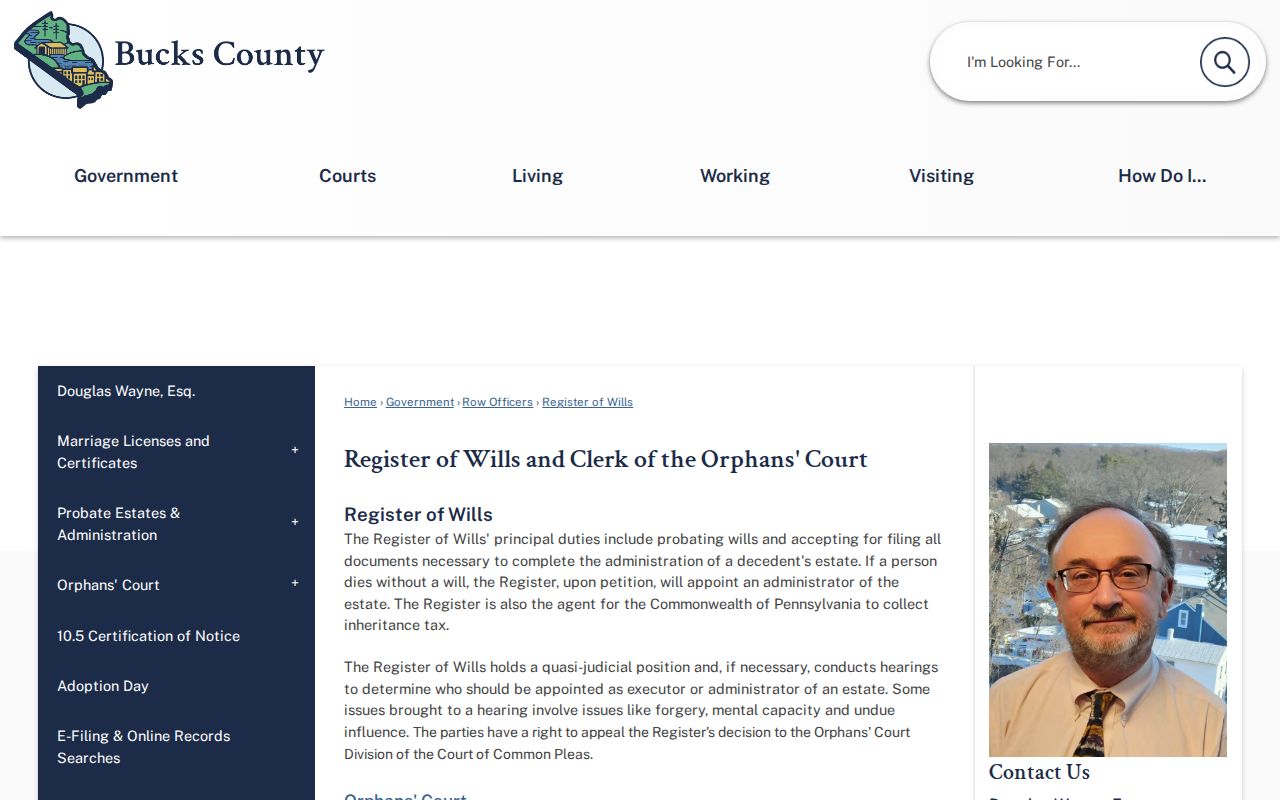
The office is the custodian for marriage and probate questions, while the Department of Health controls the separate statewide birth and death service.
Keep Bucks County Voter Status Narrow
Pennsylvania’s individual voter-registration status service is for checking one person’s registration and polling information. It is not a browseable name-and-street directory. The state directs people who need help to that service, their county election office, or 1-877-VOTESPA. For a correction or status question, the Bucks County Board of Elections is the appropriate local contact.
Election Code rules allow certain inspection and request channels, but they protect signatures and SURE registration numbers. The official voter-list form describes a Street List of registered voters, with name, residential or mailing address, party, and active or inactive status. It does not establish that every person at an address is registered or that every registered voter currently occupies it. Listed products also carry access and use limits, and internet publication is restricted.
Note: Treat an election result as dated registration evidence, never as a general assertion that a person currently lives at a particular Bucks County address.
Check Bucks County License Context
The Pennsylvania Licensing System, commonly called PALS, is a state primary-source check for a named professional or occupational license. Person mode can use board or commission, license type or number, first and last name, city, state, ZIP, county, or country. Result rows show full name, license number, profession, board, and locality. The system says it updates daily and gives no warranty, so status should be checked close to the question date.
A license result describes the licensing context supplied to that official system. It is not evidence that the locality or address on the result is a private residence. The separate Pennsylvania Business Entity Search requires the correct entity name or file number and does not search by officer or owner name. Those boundaries make both tools useful for a named affiliation, but not substitutes for a residence claim.
Review the PALS public search before using this Pennsylvania license-search screenshot.
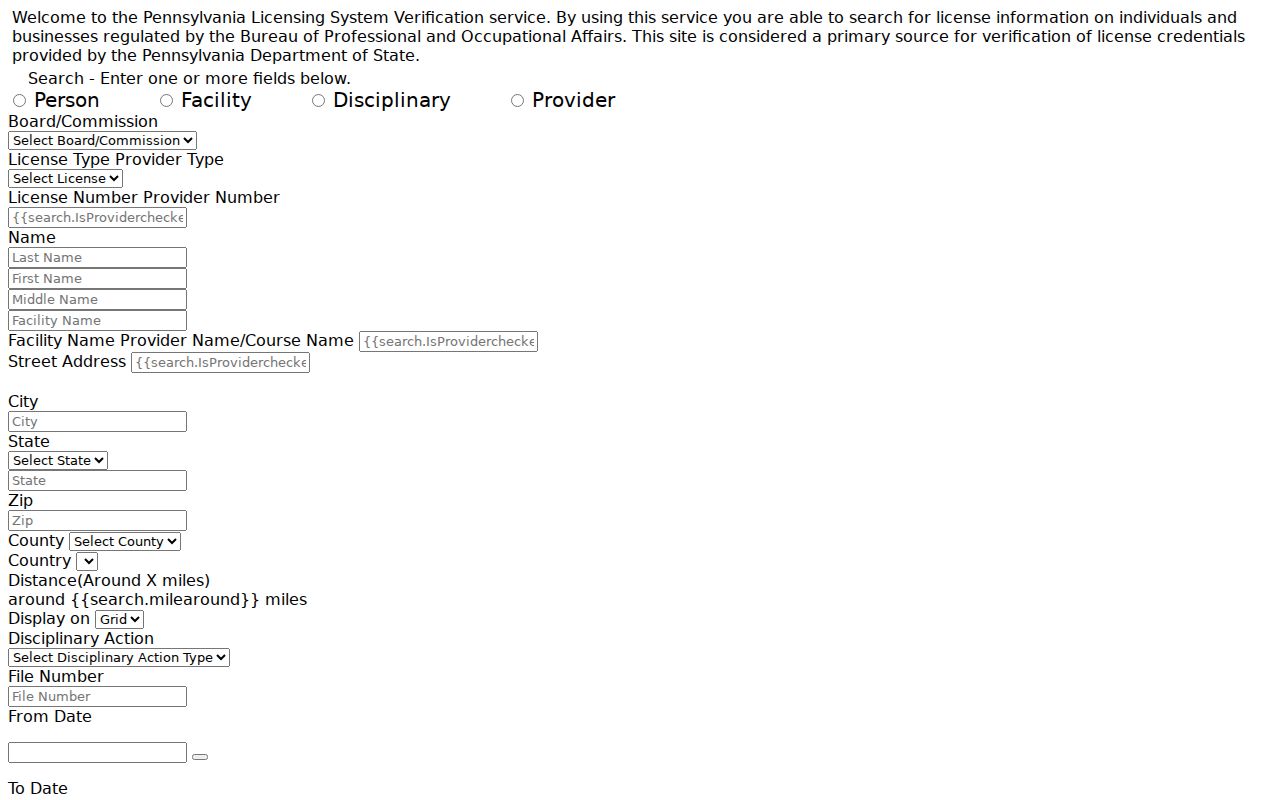
The search interface supports official credential verification while keeping a license record separate from county property and court records.
Bucks County Resident Lookup Index Numbers
For family-history work, Bucks County has a sizeable but still incomplete index layer. The Bucks County Genealogical Society reports a free transcription-index database with more than 414,000 county names. Its June 2025 status listed 35,384 birth or baptism records, 21,128 marriage records, and 119,924 death or burial records. Those figures make the index a useful lead when a spelling or locality is uncertain.
The society expressly asks researchers to verify transcriptions against originals. That matters in Bucks County because a database hit can point to a church record, burial, or event without proving identity on its own. Pair a find with the date, municipality or post office label, and a custodian record. The BCGS database provides the locally specific starting point.
Route a Bucks County Resident Lookup to Custodians
When an official web result does not answer the question, send the request to the office that maintains the record. The Recorder offers its research area and copy routes. The Board of Assessment has a public counter. The Prothonotary, Clerk, Register, and Elections Board each maintain their own records. Libraries and archives provide historical alternatives. A county-administration request cannot bypass judicial, vital, or separate row-office procedures.
Pennsylvania’s Right-to-Know Law, Act 3 of 2008, presumes agency records are public unless an exemption or other law controls. A request should ask for identifiable records, not a narrative answer. Include the person or property, time range, record type, and a known address, parcel, or case number. The normal written response period is five business days, though the law allows a specified extension. Vital, court, protected voter, and other confidential records remain governed by their own rules.
Respect Bucks County Resident Lookup Limits
Public availability has hard limits. Pennsylvania’s Safe at Home Address Confidentiality Program gives eligible participants a substitute mailing address to keep an actual address out of specified public records. It is administered by the Office of Victim Advocate and can apply to court, voter, licensing, vehicle, school, marriage, and other enrolled interactions. Application information and actual addresses are confidential under 23 Pa.C.S. ch. 67. Do not try to infer or obtain a protected address from other records.
Other restrictions also apply. RTKL §708 protects listed personal data through redaction. Vital-record confidentiality controls birth and death access. Court systems omit or restrict certain files. If a record appears wrong, contact the custodian that holds it: the Elections Board for voter issues, the maintaining court for a docket issue, the Board of Assessment for property or tax-roll information, or the relevant registry for an error.
Lawful use. A Bucks County resident lookup is for personal, lawful research such as family history, estate matters, property questions, civic transparency, or reconnecting. Never use a record to stalk, harass, intimidate, or harm anyone.